Is Your Tree Dangerous? 8 Warning Signs It May Need to Come Down
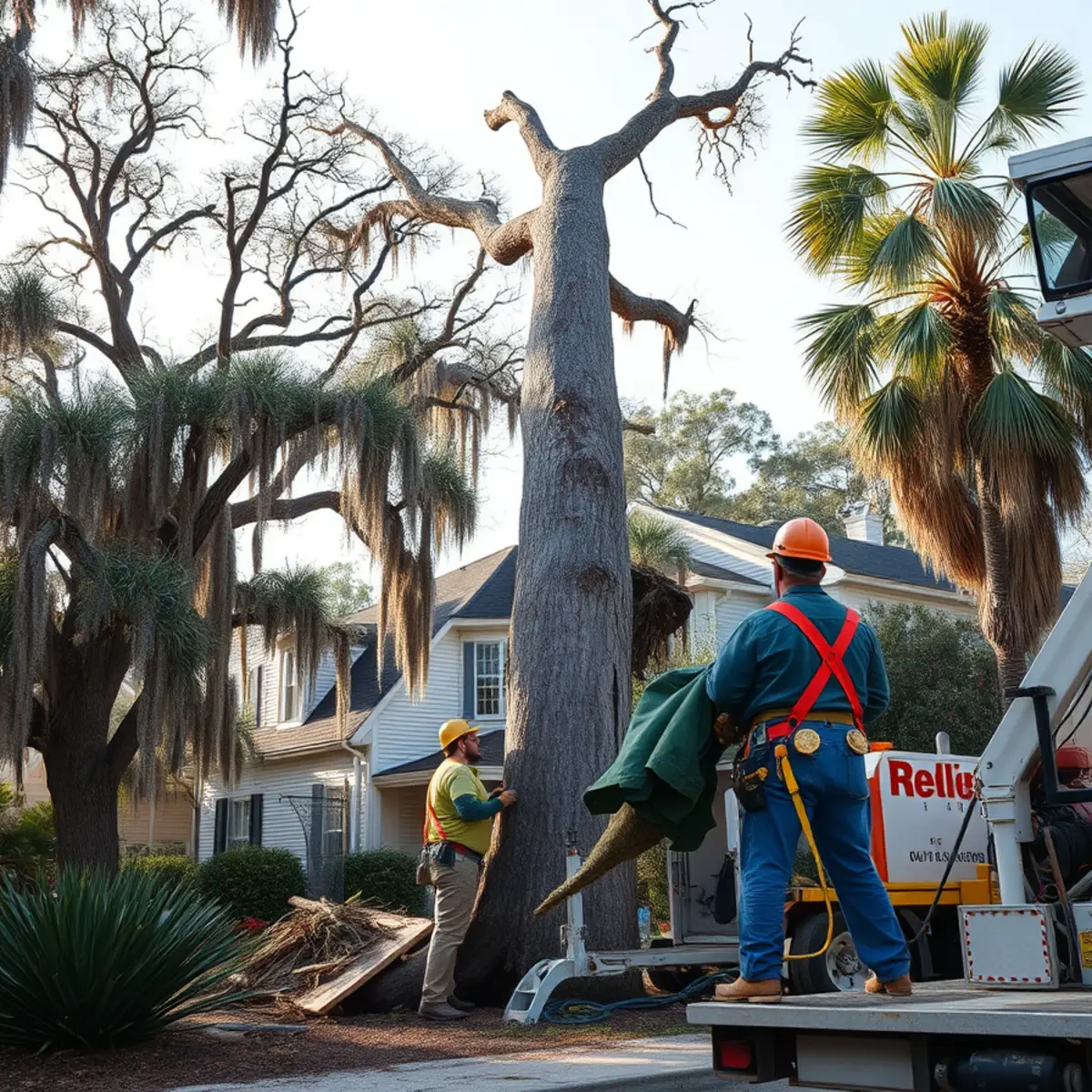
People assume a dangerous tree is a dead tree, but the two are not the same. Plenty of fully alive, green trees fail every storm season because something structural went wrong underneath the canopy. A dead tree is a maintenance problem you can see coming; a dangerous living tree is the one that catches homeowners off guard. Here are the eight things we actually look for when we decide whether a tree is a hazard.
8 signs a tree may be dangerous
- 1A new or worsening lean. Trees that grew at an angle are often fine. A tree that recently started leaning, especially after a storm or heavy rain, is the one that worries us, because it usually means the roots are letting go.
- 2Cracks or splits in the trunk. A deep vertical crack, a seam, or a visible split, particularly where the trunk forks, is a sign the tree is already failing structurally.
- 3Soil heaving or lifting roots. If the ground on one side of the trunk is cracked, mounded, or lifting, the root plate is moving. That is one of the clearest warnings a tree is about to go over.
- 4Large dead limbs or hangers. Big deadwood in the canopy, or a broken limb hung up in the branches, can drop with no warning on a calm day, not just in wind.
- 5Mushrooms or conks at the base. Fungal brackets growing on the trunk or roots usually mean internal decay. The tree can look healthy up top while the structural wood below is rotting.
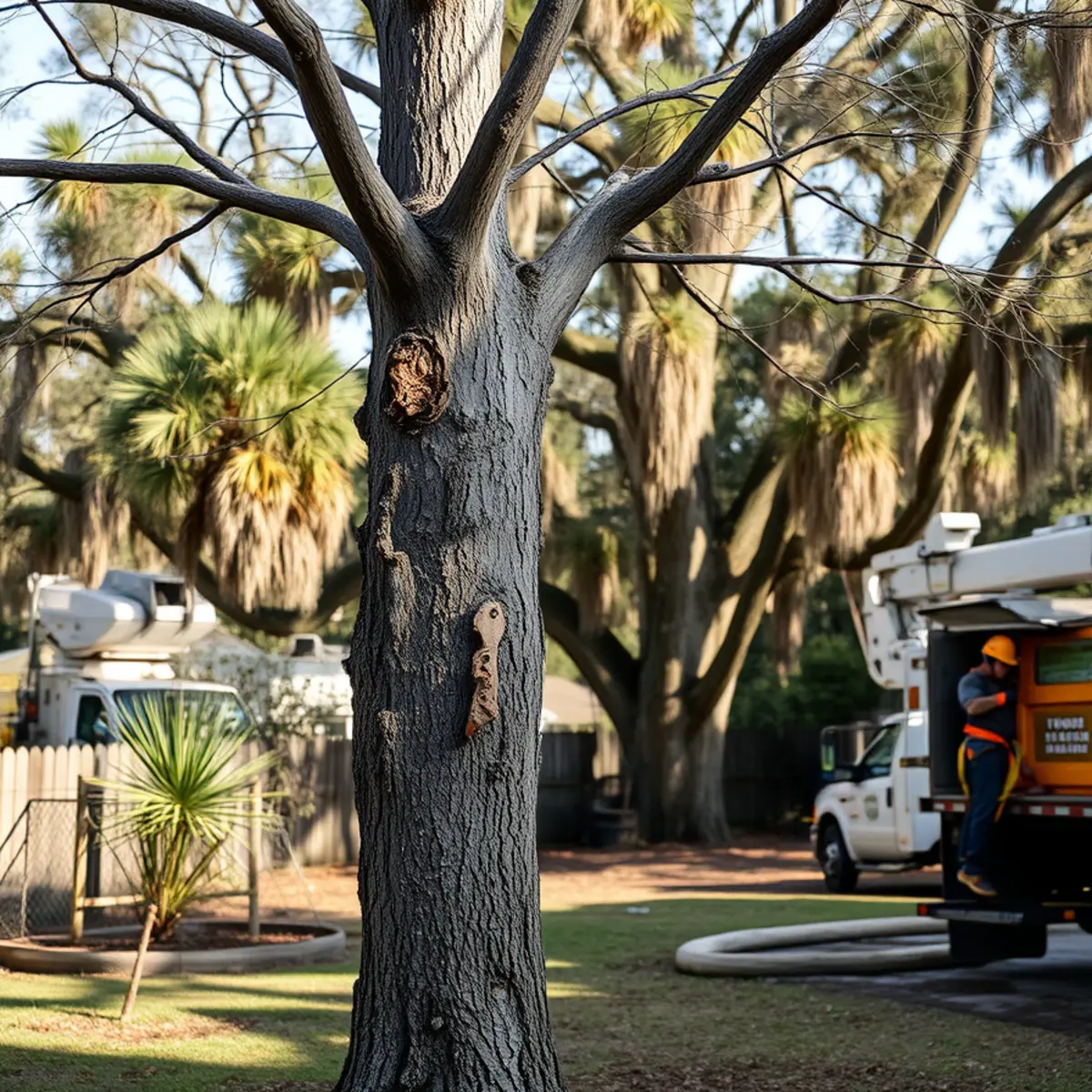
- 6A cavity or soft, crumbling wood. An open hollow, a woodpecker-riddled trunk, or wood you can push a screwdriver into signals the tree has lost strength where it needs it most.
- 7Weak, tight V-shaped unions. Where two stems grow up tightly together with bark pinched between them (included bark), that joint is far more likely to split apart in a storm than a strong, open U-shaped union.
- 8Recent construction or root damage. Trenching, grading, paving, or heavy equipment near a tree within the last few years can quietly kill the roots. The decline, and the failure, often shows up seasons later.
Dangerous does not always mean removal
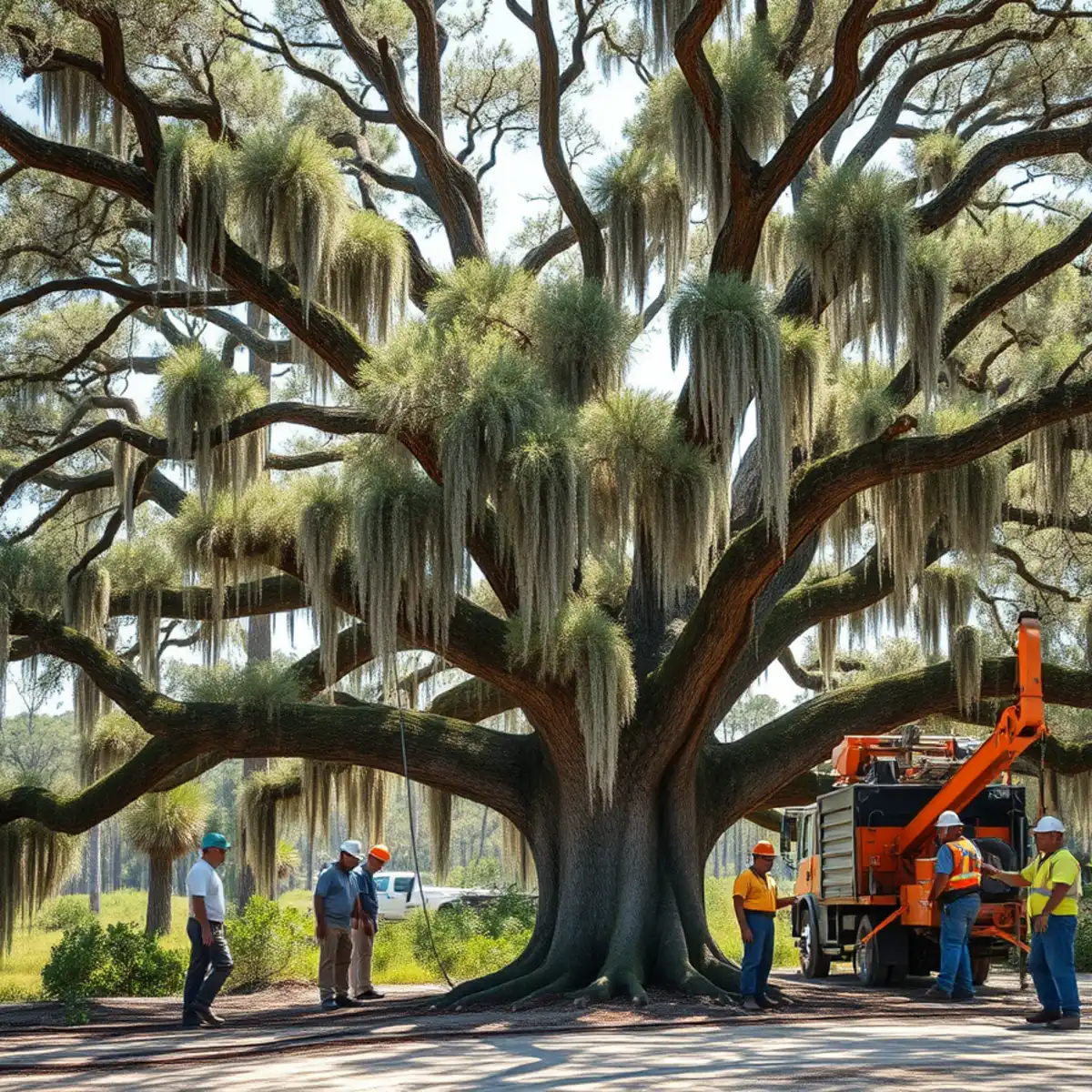
A hazard is about the combination of a defect and a target. A failing tree deep in the woods with nothing under it can sometimes be left alone. The same tree over your roof, driveway, or a play area is a different decision. And not every dangerous tree has to come down, a crown reduction to lower the sail area, cabling to support a weak union, or removing a single overextended limb can resolve the risk on a tree worth saving. When a takedown is the answer and the tree is over a structure, it often becomes crane-assisted tree removal rather than a straight felling.
The part people forget: liability
A dangerous tree you have been warned about is not just a safety problem, it is a legal one. If a hazard was obvious and you did nothing, and it later falls on a neighbor's property, you can be held responsible. We cover exactly how that works in our guide on who pays when a tree falls. The short version: documenting and acting on a known hazard protects both the people below it and you. When the tree is already dead, it moves straight to the front of the line for dead and hazardous tree removal.
The dangerous tree is rarely the one that looks scary. It is the healthy-looking one with a problem you have to know to look for.
If a tree on your property has you second-guessing it, that instinct is usually worth a look. We give free, honest hazard assessments across Chatham County and down into Richmond Hill, and plenty of the time the answer is good news, that the tree is sound and can stay.
Frequently Asked Questions
Absolutely, and those are often the ones that catch people out. A tree can have a full green canopy while its roots are failing, its trunk is cracked, or internal decay has hollowed out the wood. Structural problems, not just death, are what make a tree hazardous.
It depends on whether the lean is old or new. A tree that always grew at an angle is often fine. A tree that recently started leaning, especially with cracked or heaving soil at the base, is a serious warning sign that the roots are failing and should be looked at quickly.
No. Depending on the defect and what is below the tree, a crown reduction, cabling a weak union, or removing a single hazardous limb can sometimes resolve the risk on a tree worth keeping. A hazard assessment tells you whether the tree can be saved or should come down.
Need help with a tree in the Savannah area?
Free estimates and 24/7 emergency dispatch across coastal Georgia.