Palm Tree Care on the Georgia Coast: Trimming, Pruning & Removal
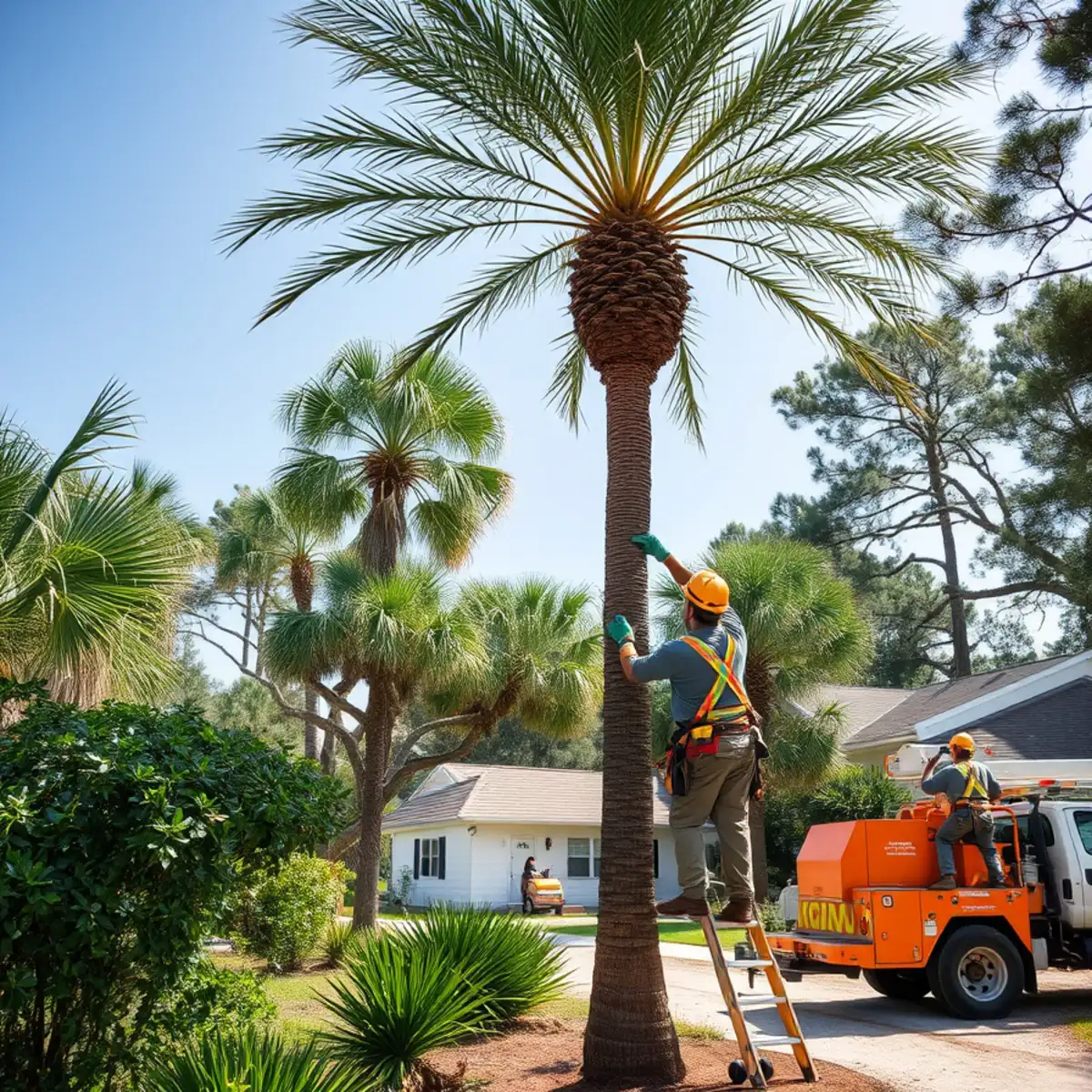
The first thing to know about palms is that, botanically, they are not trees at all, and they do not respond to pruning the way an oak or a pine does. A hardwood heals over its cuts; a palm cannot. Every frond you remove is energy the palm does not get back, which is why the most common thing we see on the coast is palms that have been loved to death with too much trimming.
The palms you actually see on the coast
The signature palm here is the cabbage palmetto, Sabal palmetto, the state tree of both Georgia and South Carolina, and it is built for this environment, salt-tolerant, wind-hardy, and happy in sandy coastal soil. You will also see windmill palms, pindo palms, and a scattering of less cold-hardy ornamentals that struggle in a hard freeze. Knowing which palm you have matters, because their cold tolerance and their care are not the same.
How, and how often, to trim a palm
Good palm trimming is mostly about restraint. The rule is simple: remove only what is truly dead or spent.
- Take off fully brown, dead fronds. Those have stopped working and can be removed any time.
- Remove spent flower stalks and fruit, which can be heavy, messy, and a draw for pests.
- Leave every green frond alone, even the lower ones drooping below horizontal. The palm is still feeding off them.
- Once a year is plenty for most palms. There is no structural pruning to do, a palm grows from a single bud at the top.
When a palm needs to come out
Palms are tough, but they do reach the end, and a dead or failing palm over a target should not wait.
- No green spear. If the newest central frond is brown and pulls out easily, the growing bud is dead and the palm will not recover.
- A new lean, often after root disturbance, flooding, or construction nearby.
- Planted too close to the house, a pool cage, or a driveway, where falling fronds or the trunk itself are a problem.
- A thinning, collapsing crown that keeps declining despite good care, which can signal disease.
The coastal pressures on your palm
Even the hardy natives face real stress here. Salt spray and storm surge burn sensitive palms near the water; a hard winter cold snap can damage the less cold-hardy ornamentals; and lethal bronzing, a disease that has moved through the Southeast, is worth knowing about if a mature palm declines rapidly. When a palm does need work, clean frond removal and safe takedowns near structures are the heart of proper palm tree service, and for mixed-canopy yards it folds into general tree trimming and pruning on a visit.
With a palm, the kindest thing you can usually do is cut less. A full green crown is a healthy palm, not an untidy one.
We look after palms all along the coast, from the beachfront lots on Tybee Island to the resort properties around St. Simons Island, and more often than not the best advice we give is to leave the green fronds on and only take what is truly dead.
Frequently Asked Questions
For most palms, once a year is plenty, and some need even less. Remove only fully brown, dead fronds and spent flower or fruit stalks. There is no structural pruning to do, so trimming more often than that mostly just stresses the palm.
No. Stripping a palm down to a few upright fronds starves it, invites pests and disease, and leaves it weaker, not stronger, going into a storm. A healthy full crown handles wind better. Avoid the hurricane cut entirely.
Check the newest central frond, the spear. If it is brown and pulls out easily, the growing bud has died and the palm will not recover, since palms grow from that single bud at the top. A palm with no live spear and a browning crown should be removed.
Need help with a tree in the Savannah area?
Free estimates and 24/7 emergency dispatch across coastal Georgia.